Scientists have recently successfully drilled into a 2,000 year old ice core in Antarctica, and can now directly observed how much the climate has evolved. In these ice cores scientists are able to receive information about previous climates using the chemistry of the air that was caught in the snow and ice. Ice cores are a very useful tool in paleoclimatology. From these little pieces of ice you can find our the solar radiation, volcanic activity and even storm events that occurred in the previous climates. Analyzing this cored will help scientists understand the series of ice ages and warm periods that occurred in the past. For more information about this drill you can read it here.
Source: AFP. "Polar Scientists Drill 2,000-year-old Ice Core : DNews." DNews. N.p., 8 May 2014. Web. 28 May 2014.
Showing posts with label ice cores. Show all posts
Showing posts with label ice cores. Show all posts
Wednesday, May 28, 2014

Friday, March 14, 2014
Ice Cores and Why They're Awesome!
The cool thing about ice in the arctic and other cold areas is that snow/ice layers on top of each other throughout the year. The snow and ice tell a lot about the temperature because in these frigid areas, the snow and ice don't actually melt. This allows the people analyzing the ice to help determine temperatures and climate of that certain layer. The snow varies in chemistry, as well as winter snow being different than the summer snow. Light and heavy oxygen can be found within the ice cores which can help indicate the climate and atmosphere for that time period. The snowfall collects dust, human pollutants, sea salt, ash and gas bubbles which then get preserved and can now be analyzed. Ice cores can be used to reconstruct temperatures, precipitation, volcanic eruptions and even forest fires. The way that ice cores are formed allow them to be easily read by showing distinct seasonal markers.
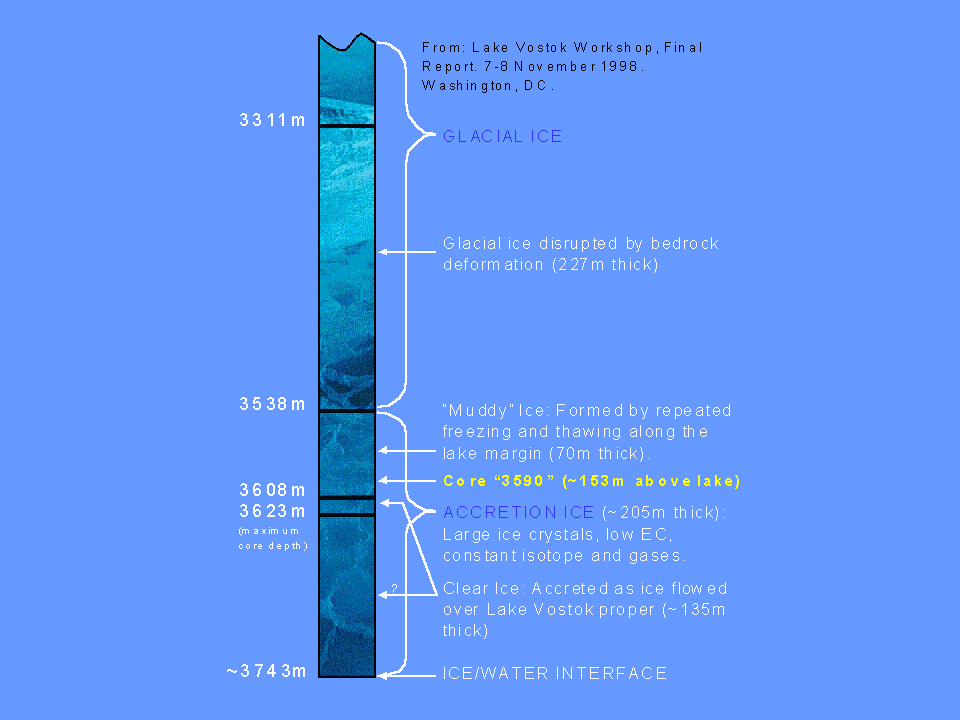
An example of an ice core is below:
 Source: here
An example of an ice core is below:
Subscribe to:
Posts (Atom)